When a child gets angry,
what do you say?
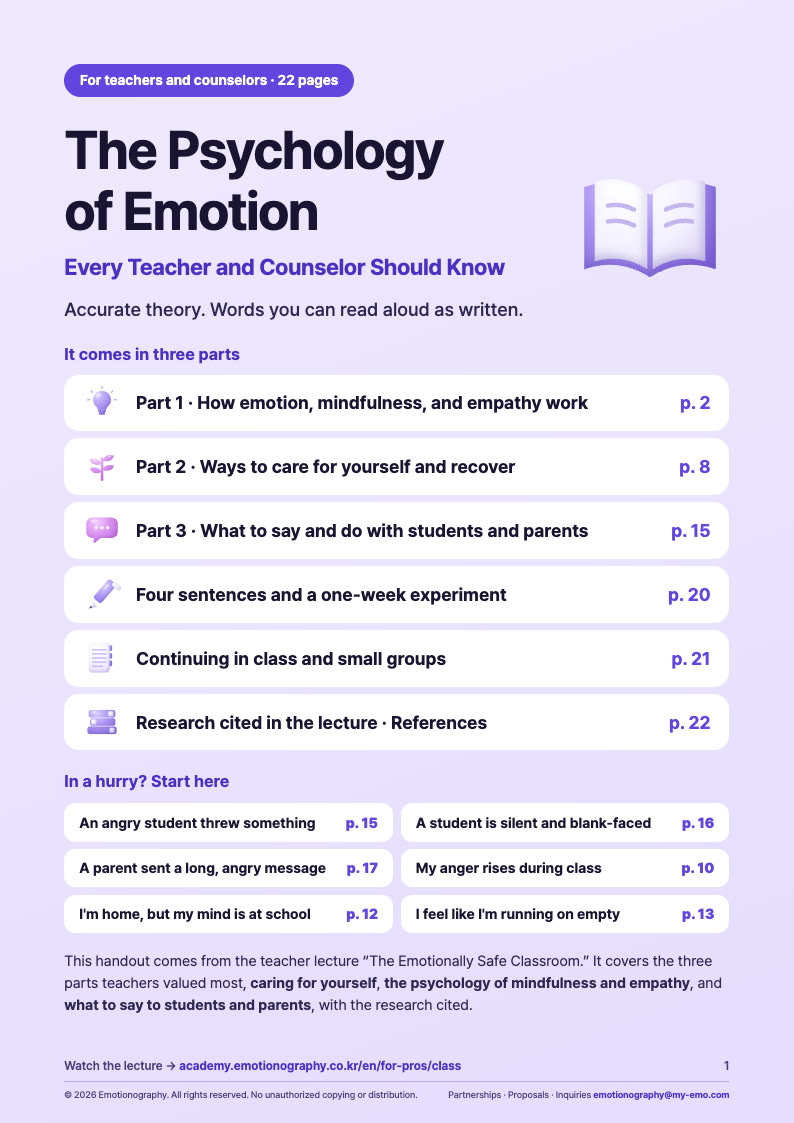
22 pages of emotion psychology
for teachers and counselors, sent to your inbox.
Open it in moments like these
Each situation has lines you can read as they are.
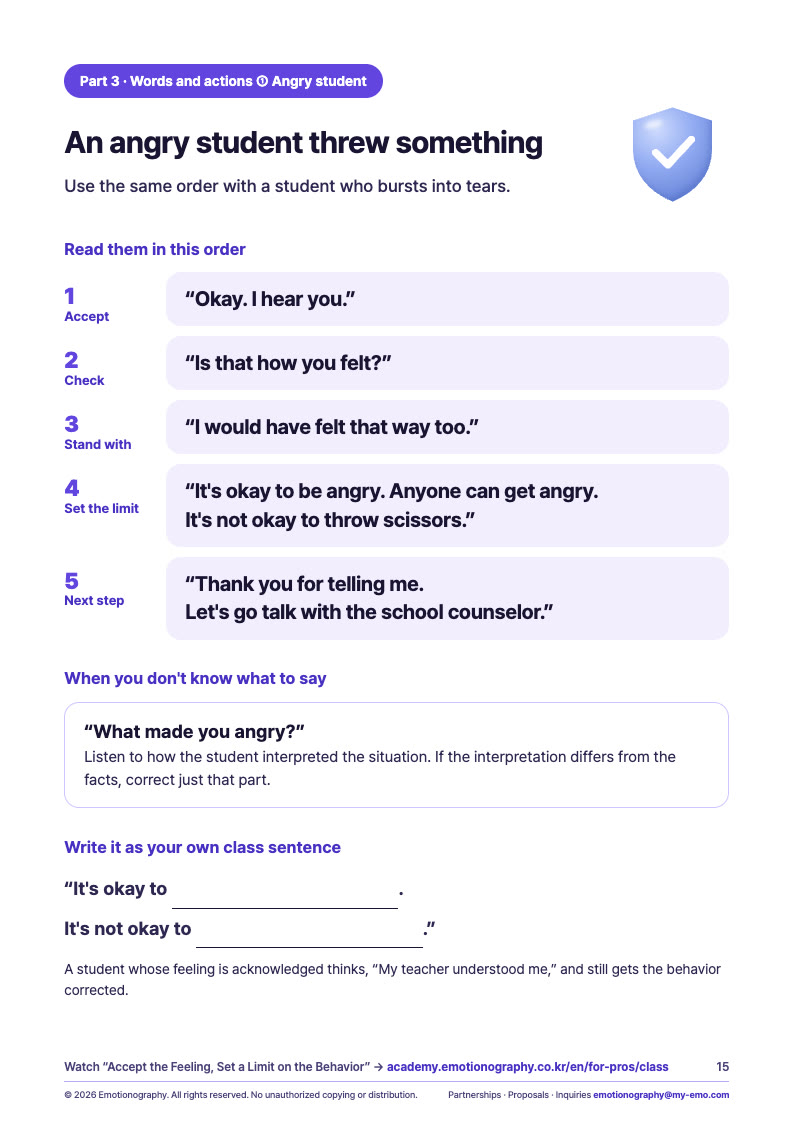
 A child threw something in angerFive lines that accept the feeling and set a limit on the behavior
 A child is quiet and shows no expressionQuestions that start with the body, and a five-minute daily activity
 A parent sent a long, angry messageA three-line reply order, with space to write your own
 My own anger rises in classFive steps to read silently, and a 30-second breath
 I am home, and the classroom is still in my headThe three-column sort, and three signs you need rest
 I want to understand the psychology properlyHow emotions, mindfulness and empathy work, with 13 references
A look at page 17
Parent message
A parent’s long, angry message
First read the anxiety and worry behind the anger.
- 1 · Name the feeling“You must have been so worried about what happened.”
- 2 · Facts you checked“I talked with the students over the past week, and here is where things stand now.”
- 3 · Next step“I’ll check in again on Friday and get back to you.”
 The other 21 pages come by email
We will email you all 22 pages
Parts 2 and 3 of the lecture open too.

It is on its way
We sent it to . If it does not arrive, please check your spam folder.
Watch the lecture while you waitBringing it to a class or to clients? See the guides · $9.99

Made in the counseling room and the research lab
We have built counseling materials for school counseling centers and emotion classes for multicultural students.
- CEO, Emotionography
- Senior Researcher, Seoul National University Education Research Institute
- Ph.D., Claremont · Spiritually Integrated Psychotherapy
The three parts teachers responded to most
Picked from the 49-minute lecture.
 How to recover and care for yourselfThree signs of burnout, and a line between work and home
 Why mindfulness and empathy workWhy a feeling settles once it is noticed
 What to say to students and parentsExact sentences that accept the feeling and set a limit on the behavior
Part 1 is open to everyone.
More for your school and counseling room
Pick one to start.
 Teachers · schools
Teach emotions in class
Session plans and student workbooks for a term, a month or an after-school program.
See the school program →
Free month
Counselors · caregivers
Take care of yourself
Care for the Counselor, a course for people whose work is caring for others.
See the counselor course →